If you have indoor cats like I do, you already know how sensitive they can be to change. Move a chair two inches and suddenly it is a national emergency. So when I first introduced my indoor cats to an outdoor enclosure, I knew I could not just open the door and hope for the best.
Learning how to introduce a cat to an outdoor enclosure safely is not about pushing them outside. It is about helping them feel secure, curious, and in control. I want to walk you through what worked for me so you can help your cat transition calmly and confidently.
TL;DR: How To Introduce A Cat To An Outdoor Enclosure Safely
Introducing your cat to an outdoor enclosure safely is all about patience and trust.
- Let your cat observe the enclosure before opening access.
- Check that the structure is fully secure and stable.
- Open the door and allow your cat to step out on their own.
- Keep early sessions short and positive.
- Add familiar items like beds or scratching posts to build comfort.
- Watch body language and adjust if your cat seems stressed.
- Stick to a calm routine so the enclosure becomes part of daily life.
When you move at your cat’s pace instead of forcing the experience, the enclosure becomes a safe extension of their indoor world rather than something overwhelming.
Start With Curiosity, Not Pressure
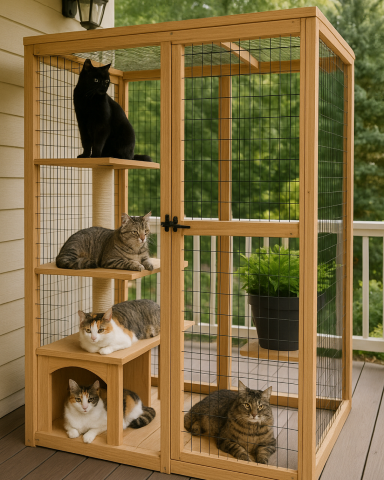
The first thing I learned is this: do not rush it.
When our enclosure was finished, I left the access door closed for a few days and just let my cats observe it from inside. They could see it. They could smell the new wood and mesh. They could hear the outdoor sounds drifting in.
Cats are observers first. Explorers second.
Before opening access, I would sit near the door and let them watch birds or squirrels through the window. I wanted the enclosure to feel like an extension of their world, not a sudden drop into the unknown.
If your cat is hesitant, that is normal. Some cats step out confidently. Others need time. Let them set the pace.
Do A Safety Check Before The First Step
Before any introductions, make sure the enclosure is fully secure.
Check that:
- All mesh panels are tightly secured
- There are no gaps along the bottom
- Latches close completely
- Roofing is stable
- Shelves are secure and do not wobble
Indoor cats are not used to unpredictable footing or outside sounds. The space needs to feel solid.
I also made sure there were no toxic plants nearby and that the area was shaded and protected from strong wind. Safety is what allows confidence to grow.
Open The Door Slowly And Stay Close
The first time I opened access, I did not carry my cats outside. I simply opened the door and sat down near it.
One of my cats stretched her neck out first. Then she stepped back inside. Then she tried again.
That is exactly what you want to see.
Your presence matters during those first few sessions. Sit nearby. Talk softly. Let them know this space is safe because you are there.
If your cat steps out and immediately runs back in, that is fine. That is progress. They tested it.
Keep The First Sessions Short
The first few outdoor enclosure sessions should be short and positive.
Five to ten minutes is enough in the beginning.
I would open the door, let them explore, then gently guide them back inside before they became overwhelmed. Ending on a calm note builds trust.
Gradually, you can extend the time as your cat grows more comfortable.
Think of it like building tolerance. The goal is confidence, not endurance.
Add Familiar Comforts
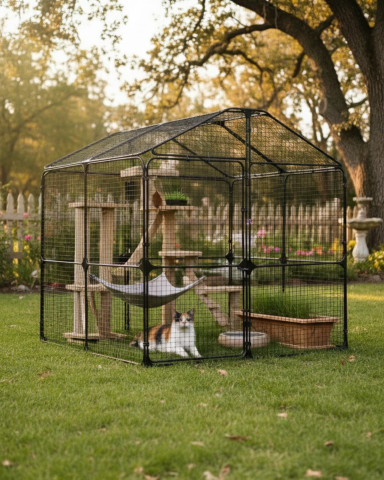
One thing that made a big difference for my indoor cats was familiarity.
I placed:
- A favorite blanket
- A scratching post they already used
- A familiar cat bed
- Toys they loved
This signaled that the enclosure was still part of their territory.
Cats rely heavily on scent and routine. Bringing familiar items outside helps bridge that emotional gap between inside and outside.
Use Vertical Space To Build Confidence
Indoor cats love height because it makes them feel secure.
When my cats first went into the enclosure, they immediately looked for higher ground. Once they climbed onto a platform and could observe everything from above, their body language changed. Their tails relaxed. Their posture softened.
If your enclosure includes shelves or perches, encourage your cat to use them. And if your enclosure doesn’t include them, consider installing some and see how your cat reacts. Height often equals confidence.
Watch Body Language Carefully
Your cat will tell you how they feel if you pay attention.
Signs of comfort:
- Relaxed tail
- Slow blinking
- Curious sniffing
- Sitting or grooming
Signs of stress:
- Flattened ears
- Low crouched posture
- Dilated pupils
- Attempting to bolt
If your cat seems overwhelmed, calmly guide them back inside and try again another day.
Introducing an outdoor enclosure safely is not a race. It is a conversation.
Stick To A Routine
Cats thrive on predictability.
I began opening the enclosure at the same time each day. Soon, my cats started waiting by the door. What began as hesitation turned into anticipation.
Routine turns a new experience into a trusted one.
If possible, choose calm times of day. Early morning or late afternoon tends to be quieter than midday when neighborhood activity is higher.
Be Extra Mindful In Rural And Urban Areas

Living in the country, I am aware of predators like hawks and coyotes. Even though my cats are protected inside the enclosure, those sounds can still trigger instinctive reactions.
In city environments, loud vehicles, barking dogs, or construction noise can create similar stress.
If your cat startles easily, start during quieter hours. Over time, they will learn that those outside sounds do not equal danger inside the enclosure.
Avoid Forcing Or Carrying Them Out
One of the biggest mistakes I see is physically placing a cat in the enclosure before they are ready.
That can backfire quickly.
Cats need to feel that they chose to step outside. That choice builds confidence and prevents negative associations.
Let them walk out on their own, even if it takes several days.
Celebrate Small Wins
The first time one of my cats laid down and relaxed in the enclosure, I knew we had crossed a threshold.
It was no longer “outside.” It was simply another safe space.
You will see little signs like that too. A longer stay. A relaxed stretch. A playful pounce.
Those moments tell you that you introduced your cat to the outdoor enclosure safely and thoughtfully.
FAQ: How To Introduce A Cat To An Outdoor Enclosure Safely
How long does it take for a cat to adjust to an outdoor enclosure?
Every cat is different. Some of my indoor cats stepped out confidently within a few days. Others took a couple of weeks before they felt completely relaxed. The key is to move at your cat’s pace. Short, positive sessions build confidence much faster than forcing them to stay outside longer than they are comfortable.
What if my cat refuses to go into the enclosure?
Do not panic. This is common, especially with cautious indoor cats. Try leaving the access door open while you sit nearby. Add familiar bedding or toys inside the enclosure. You can also start by simply letting them observe it through a window for a few days. Curiosity usually wins, but patience is what makes the difference.
Is it safe to introduce an older indoor cat to an outdoor enclosure?
Yes, as long as the enclosure is secure and stable. In fact, older indoor cats often benefit greatly from the mental stimulation. Just make sure platforms are sturdy, ramps are not slippery, and heights are manageable. Senior cats may prefer lower shelves and soft resting spots.
Should I supervise my cat during the first few visits?
Yes. I always recommend supervising the first several sessions. Your presence helps your cat feel secure. It also allows you to observe body language and respond quickly if they seem overwhelmed. Once your cat consistently appears relaxed and confident, supervision can gradually become less hands-on.
What are signs my cat is stressed in the enclosure?
Watch for flattened ears, crouching low to the ground, wide pupils, excessive vocalizing, or repeated attempts to rush back inside. These signs mean your cat needs a break. End the session calmly and try again another day. Introducing an outdoor enclosure safely is about building trust, not pushing through fear.
Final Thoughts
Learning how to introduce a cat to an outdoor enclosure safely is really about respecting your cat’s personality.
Some cats are bold. Some are cautious. All of them deserve patience.
If you move slowly, check safety carefully, and stay present during the transition, you are not just giving your cat outdoor access. You are giving them enrichment, stimulation, and confidence without sacrificing security.
And that balance is exactly why I built outdoor enclosures for my indoor cats in the first place.
If you have questions about your cat’s temperament or setup, I am always happy to help. Every cat is different, but the goal is the same: calm, curious, and happy inside and out.
Looking for The Best Outdoor Cat Enclosure?
Now that you know why an outdoor cat enclosure is so important to your cat’s health & well-being, its time to take action on giving them what they need. But where do you start?
Right here! Checkout our Outdoor Cat Enclosures Hub to find the right catio or enclosure for your cat. Click the button below to learn more.