If you are thinking about giving your indoor cat a safe outdoor space, size is usually one of the first questions that comes to mind. I remember feeling the same way when I first started researching cat enclosures. I wanted my cats to enjoy the outdoors and feel free, but I also wanted their space to be practical for my home and easy to maintain. The right size enclosure makes a noticeable difference in how active, calm, and confident a cat becomes. Once you understand how cats move and what they naturally seek outdoors, choosing the right dimensions becomes much easier. So How Big Should An Outdoor Cat Enclosure Be? Lets talk about it.
TL;DR – How Big Should An Outdoor Cat Enclosure Be
Outdoor cat enclosures should be large enough for your cat to stretch, climb, observe, and move freely. A comfortable minimum for one cat is about six feet long by three feet wide by six feet tall. Two cats usually need at least eight feet by four feet by six feet with added vertical features so each cat can claim personal space.
Personality matters. Active cats need more room, while shy cats need height and hiding spots. Vertical space transforms any enclosure and makes even small footprints feel open. If you are unsure, choose the larger size because cats always appreciate extra territory.
For layout ideas and design support you can explore the resource hub for Outdoor Cat Enclosures.
Summarize This Content with AI
Why Size Really Matters
Cats are natural explorers and athletes. Even indoor cats have strong instincts to climb, jump, stretch, observe, and patrol. When their space is too small they can become bored or anxious. When the enclosure is appropriately sized they become more relaxed and engaged.

I have seen this firsthand with my own cats. A little extra room often becomes the difference between a curious observer and a cat that fully thrives outside.
The Minimum Size For One Cat
For a single cat you want enough room for movement, lounging, and vertical enrichment. A comfortable minimum is an enclosure that measures about six feet long by three feet wide by six feet tall. This allows your cat to stretch, climb, perch, and wander without feeling boxed in.
If you choose a smaller footprint you must add additional vertical elements like shelves, ramps, or platforms so your cat has more usable space. Cats naturally claim territory by height which means vertical features help even a compact enclosure feel larger.
Want some good examples and recommendations for Outdoor Cat Enclosures? Checkout our top picks by clicking the button below.
The Ideal Size For Multiple Cats
If you have more than one cat, the space needs to be increased. Cats share space in a very specific way and they handle conflict through avoidance rather than confrontation. This means your enclosure must offer enough room for each cat to retreat, perch, or claim a favorite spot.
For two cats the ideal starting point is an enclosure that measures eight feet long by four feet wide by six feet tall. Again, the more vertical space you add, the more harmony you create. I always encourage cat parents with more than one cat to think in terms of zones. A lounging zone, a high observation zone, and a play zone create a peaceful outdoor experience for everyone.
Consider Your Cat’s Personality
Some cats are sun lovers who stretch out for hours. Others are movers who patrol, climb, and bounce between perches. I always tell readers to choose the size of the enclosure with their cat’s personality in mind.
A timid cat often feels safer with taller structures and multiple hideaways. A high energy cat needs extra running room or taller climbing towers. If your cat loves to watch birds or squirrels you may want a longer enclosure so they can pace while they observe the world.
Think About Movement Space
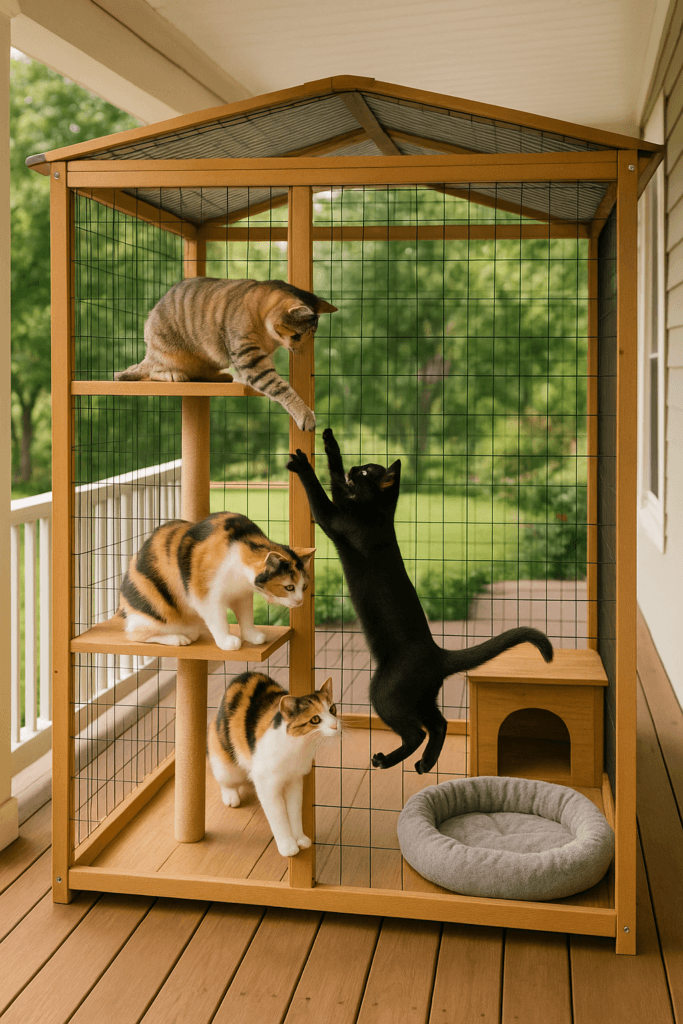
Cats do not simply move from point A to point B. They creep, jump, wiggle, sprint, and weave around structures. When you leave open pathways inside the enclosure your cat can perform these natural behaviors without frustration.
An enclosure that feels cramped can lead to stress which is the opposite of what we want. Outdoor cat enclosures are meant to create a calm, enriching environment. That is why a bit of breathing room inside the structure goes a long way.
Add Vertical Height To Maximize Any Size
Vertical height is one of the best kept secrets of cat enclosure design. I have built and tested enclosures of all sizes and vertical space always transforms the experience.
Even if your footprint is limited you can create a wonderful space by stacking climbing shelves, adding an upper resting shelf, or including a tall scratching post. Height encourages exercise and observation which are two things that dramatically improve a cat’s mental health.
Consider Long Tunnels Or Extensions
You are not limited to one box shaped structure. Some of the most enjoyed cat enclosures I have ever seen use tunnels, walkways, or small pods that branch off the main enclosure.
These additions give your cat more territory to explore without requiring a huge amount of yard space. If you are working with a small yard or patio this approach helps you create an enriching world in a compact footprint.
Match The Size To Your Yard And Lifestyle
The best enclosure is one that fits your space and your routine. I have seen beautiful enclosures on apartment balconies as well as expansive walk in catios in rural backyards.
What matters most is that the enclosure is secure, weather appropriate, and designed with your cat’s needs in mind. Larger is usually better, but practicality is important too. Choose a size you can maintain comfortably because clean, well kept spaces encourage cats to use them regularly.
A Helpful Rule
If you are stuck between two sizes, choose the larger option. Cats rarely feel overwhelmed by extra space. They usually claim it with joy.
Still Searching For A Safe Outdoor Enclosure Your Cat Will Actually Use?
I put together a shortlist of the safest and most reliable enclosures so you do not waste time on options that fall apart or stress your cat. If you want proven picks that solve the safety and space problem fast, you can start with this guide.
FAQ: How Big Should An Outdoor Cat Enclosure Be
-
What is the minimum size for a cat enclosure?
A good minimum size for one cat is an enclosure that measures about six feet long by three feet wide by six feet tall. This gives your cat enough room to stretch, move, climb, and relax without feeling confined.
-
Do larger enclosures reduce stress?
Yes. A larger space allows your cat to express natural behaviors such as climbing, pacing, observing, and finding separate zones to rest. These activities support mental health and help reduce anxiety.
-
How much space do two cats need?
Two cats should have an enclosure that begins around eight feet long by four feet wide by six feet tall. Cats share space by claiming different zones, so a larger footprint and added vertical elements help prevent tension.
-
Can a small enclosure still work?
A small enclosure can work well if you maximize the vertical space. Stacked shelves, tall posts, and upper resting platforms make the space feel larger and encourage natural activity.
-
Does height matter as much as length and width?
Height is often the most valuable feature in an outdoor cat enclosure. Cats feel more confident when they can perch above ground level. Height also increases usable space without needing a larger yard footprint.
-
What if I live in an apartment?
Balcony enclosures can be very effective. Choose a secure, tall design that fits your available space and add plenty of vertical shelves. Even small balconies become enriching outdoor zones when designed thoughtfully.
-
Should an enclosure include open walking space?
Yes. Cats move in varied patterns rather than straight lines. A clear walkway inside the enclosure supports natural exercise and prevents frustration.
-
Do tunnels or extensions make an enclosure feel larger?
Tunnels and extensions add territory without requiring extra yard space. They give your cat more to explore which increases confidence and reduces boredom.
-
How do I know if my enclosure is too small?
If your cat avoids the enclosure, becomes restless, or shows signs of boredom, the space may be too limited. Cats send clear signals when they do not feel comfortable. Adding height, more shelves, or an extension often solves this issue.
-
Should I choose the bigger size if I am unsure?
Yes. When you are choosing between two sizes, the larger option almost always provides a better experience. Cats enjoy open territory and rarely feel overwhelmed by extra room.
Recommended Articles
If you found this helpful and want to continue planning your enclosure, you may enjoy these guides:
- How Outdoor Cat Enclosures Reduce Anxiety And Stress
- Best Outdoor Cat Enclosures And Catios For 2026
- Benefits Of Outdoor Enclosures For Cat Health
- Outdoor Cat Enclosures For Small Yards And Patios
Key Takeaways
- Cats need room to stretch, climb, perch, and explore, so enclosure size directly impacts their comfort and stress levels.
- A good starting size for one cat is about six feet long by three feet wide by six feet tall.
- Two cats usually need at least eight feet by four feet by six feet so each cat can claim personal space.
- Height is just as important as floor space because it adds territory and supports natural feline behavior.
- Small enclosures can feel larger when you add shelves, tall scratching posts, and upper resting platforms.
- Tunnels and extensions expand a cat’s territory without requiring a large yard.
- When choosing between two sizes, the larger size almost always creates a better experience for your cat.
Readers who want layout ideas and feature suggestions can explore additional guidance in the Outdoor Cat Enclosures resource hub.
Choosing the right size for your outdoor cat enclosure is one of the most important steps in creating a safe and enriching space for your cat. When the enclosure feels roomy and thoughtfully designed, your cat relaxes, explores, and settles into outdoor time with real confidence.
You do not need a huge yard or a complicated build to make this happen. You simply need a space that respects how your cat moves, thinks, and enjoys the world.
If you are ready to take the next step and want help choosing designs, layouts, materials, or enrichment features, the hub has everything you need to plan a space your cat will love. You can explore guides, product ideas, and detailed walkthroughs that make the process easy to understand and enjoyable to create.
Click the button below to visit the resource hub to continue your outdoor cat enclosure journey and find the perfect solution for your home.